Wellness Living vs. Normal Condos: The Real Value for Foreign Buyers
Thailand has long been one of Asia’s most attractive property markets for foreign buyers. Sunshine year-round, a rich cultural heritage, world-class healthcare, and a cost of living far below regional rivals like Singapore or Hong Kong all add to its appeal. For retirees, visa schemes such as the Long-Term Resident Visa make settling down in Thailand easier than ever. For professionals and digital nomads, Bangkok offers connectivity, convenience, and a lifestyle balance that few global capitals can match.
But once buyers begin comparing options, the property search often narrows to location, unit size, and price per square meter. Condominiums dominate the market and appear to be the most straightforward choice. For many foreigners, that’s where the decision starts and ends.
The reality, however, is more complex. A normal condo might look like an easy investment, but it doesn’t always deliver on long-term value, quality of life, or peace of mind. That’s where a different model steps in — the wellness residence.
Wellness living isn’t just another marketing label. It’s a design philosophy that integrates healthcare, green space, community, and sustainable architecture into one living environment. And for foreign buyers who want more than just four walls, the choice between a normal condo and a wellness residence is more than financial — it’s about the lifestyle and security they want for the future.
As wellness living has already been described in Thailand’s first integrated community [link to Article 1: Why Thailand’s First Wellness Residences Are Redefining Modern Living], and as explored through the idea of green and healthy living [link to Article 2: Green Living, Healthy Living], the next natural step is to ask: how do these communities compare directly with normal condos?
What You Get with a Normal Condo in Thailand
Condominiums are the default choice for foreigners buying property in Thailand, and for good reasons:
- Convenience: Often near BTS or MRT lines.
- Amenities: A pool, gym, and sometimes a rooftop garden.
- Ownership: The simplest property type foreigners can legally buy in their own name.
But beneath the glossy marketing images, the day-to-day experience of a standard condo can feel limited.
- Shrinking living space: CBRE Thailand reported in 2022 that average condo unit sizes in Bangkok have been steadily shrinking. Many new one-bedroom units are now 30–35 sqm — fine for a pied-à-terre, but cramped for long-term living.
- Hidden costs: Beyond purchase price, buyers face monthly common area fees, sinking fund contributions, and rising maintenance costs. Healthcare, of course, is completely separate.
- Lack of family-friendly facilities: While some condos may have playgrounds or small gardens, they rarely provide environments where families — or older adults — can thrive.
- Isolation: Many condo residents never meet their neighbors. For expats, this means building a social circle from scratch in a new city.
For a few nights or months, these shortcomings might not matter. But for foreign buyers planning a long-term stay — especially those in their 30s–50s or approaching retirement — they can make the difference between comfort and frustration
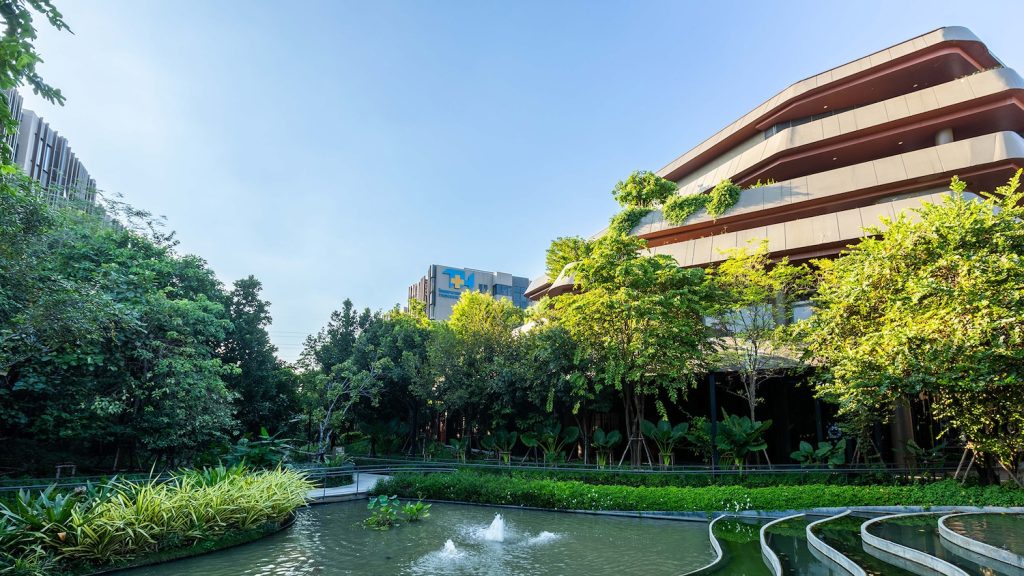
Cost of Ownership Comparison
At first glance, normal condos in Bangkok can look cheaper. But the true cost of ownership tells a different story. Common area management fees typically range from 40 to 70 THB per square meter per month. For a 50 sqm unit, that adds up to 2,000–3,500 THB monthly, not including electricity, water, or sinking fund contributions for building repairs. On top of this, healthcare remains an entirely separate expense. Annual check-ups, minor treatments, or specialist visits at private hospitals can easily add tens of thousands of baht per year for a couple. Wellness residences, by contrast, are structured to integrate preventive healthcare and community services into the lifestyle package. This doesn’t just simplify budgeting — it makes the services residents value most of everyday life.
What Wellness Living Offers Instead
A wellness residence vs condo comparison makes one truth clear: a wellness residence is more than a home. It’s a lifestyle environment designed to take care of your physical, mental, and social well-being.
At Jin Wellbeing County in Pathum Thani, wellness living is part of every layer of design. That includes:
- Healthcare on-site: Preventive check-ups, on-call clinics, and continuum-of-care services for peace of mind.
- Green landscapes: Expansive gardens, shaded walkways, and natural light in every living space.
- Community life: Built-in opportunities to connect, from group fitness to workshops and shared dining.
- Future-ready design: Sustainability features like natural ventilation and water management systems.
Most importantly, Jin’s model integrates what it calls the continuum of care: a seamless pathway from independent living to assisted living, should residents need more support later in life. This forward-thinking approach is a major reason why wellness residences appeal not only to retirees but also to younger buyers planning for the decades ahead.
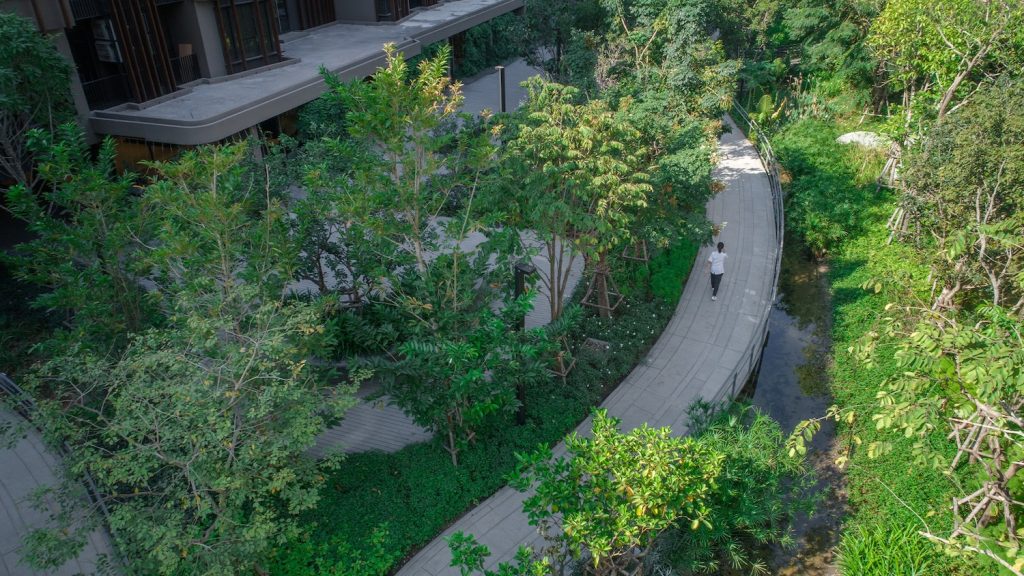
Comparing Key Factors: Wellness Residence vs Condo
1. Healthcare and Peace of Mind
- Normal condo: No healthcare services, leaving residents to manage hospital visits independently.
- Wellness residence: Preventive healthcare and clinical support built into the community.
For foreigners, healthcare is often one of the deciding factors when choosing where to live abroad. According to the World Health Organization’s global health system performance report in 2019, Thailand ranked among the top in Asia for both quality and affordability of healthcare.
But accessibility matters. In a normal condo, residents rely entirely on external hospitals. In a wellness residence, medical services are integrated into the lifestyle. Preventive screenings, wellness check-ups, and 24-hour assistance provide peace of mind that no condo gym or rooftop pool can match.
For context, a comprehensive private hospital check-up in Bangkok can cost around US$200 (approx. THB 7,000). Multiply that by a couple or family members every year, and the convenience of having healthcare on-site becomes a significant advantage.
This is why the idea of a condo with healthcare in Thailand has become increasingly appealing to international buyers. It is more than convenience — it is security.
2. Green Living and Everyday Balance
- Normal condo: Small rooftop gardens or decorative landscaping.
- Wellness residence: Acres of greenery, designed for daily interaction with nature.
Green spaces are not a luxury — they are a necessity for modern living. The World Health Organization’s 2016 review on urban green spaces linked greenery to reduced risks of cardiovascular disease, obesity, and depression. A parallel study from the Harvard T.H. Chan School of Public Health in 2016 found that people living in the greenest neighborhoods had a 12% lower risk of premature death.
For expats relocating from dense urban centers like Hong Kong or Tokyo, the difference is striking. Wellness communities in Thailand offer open skies, clean air, and walking paths where daily routines become restorative. These are the real benefits of wellness living in Thailand that go far beyond aesthetics.
Sustainability That Supports the Future
Wellness living also speaks to a growing global value: sustainability. Residences like Jin Wellbeing County are designed with energy efficiency and natural ventilation in mind, reducing dependence on artificial cooling. Rainwater harvesting, waste management systems, and smart orientation of buildings make everyday living lighter on the environment. For younger foreign buyers — especially Gen X and late Gen Y — this matters deeply. They want homes that not only feel good to live in, but also align with eco-conscious principles. Choosing a wellness residence allows them to invest in both their health and the planet’s future.
3. Community and Belonging
- Normal condo: Privacy often means isolation, with little organic interaction among residents.
- Wellness residence: Built-in community, shaped by wellness-focused activities.
Social belonging is one of the most underestimated aspects of choosing a home abroad. Loneliness, according to global research by the World Health Organization, is now recognized as a growing public health risk — linked to higher rates of depression, anxiety, and even early mortality.
Wellness communities are designed to counter this. Group fitness, shared dining, hobby workshops, and cultural events create natural opportunities to connect. For foreign buyers, this can ease the transition into life in Thailand, making the community feel like an extension of home.
4. Long-Term Value and Investment
- Normal condo: Competes in a crowded market, often depreciating as new projects launch.
- Wellness residence: Aligns with a global trend that is growing rapidly.
The Global Wellness Institute, in its 2022 Global Wellness Economy Monitor, valued the global wellness real estate market at nearly US$400 billion (approx. THB 14 trillion) and projected growth to US$580 billion (approx. THB 20.3 trillion) by 2025.
For foreign buyers, this means wellness real estate isn’t just a lifestyle choice — it’s a segment with future-proof investment potential. Rather than blending into the mass of Bangkok condos, wellness residences stand apart as part of a global growth market.
This growth is not limited to Thailand. Wellness real estate is booming worldwide, from North America to Europe and across the Asia-Pacific. In the United States, projects that combine healthcare and housing have become one of the fastest-growing niches in real estate. In Japan and Singapore, aging populations are driving demand for communities that integrate medical support with daily living. Thailand stands out because it is entering this trend early, with lower property prices and a stronger lifestyle appeal compared to its regional neighbors. For foreign buyers, that means they can access wellness real estate at a more attractive entry point — while still aligning with a global movement that shows no sign of slowing down.
Who Benefits Most from Wellness Residences?
- Expats relocating to Thailand: They need healthcare and community as much as location.
- Digital nomads: Work-life balance is easier with green co-working spaces and social connections.
- Early retirees (40s–60s): Continuum-of-care provides long-term peace of mind.
- Families: Healthier environments to raise children.
- Investors: Opportunity to rent to the growing demographic of health-conscious expats and retirees.
This range of appeal is what sets wellness communities apart. They are not just for retirees — they are for anyone who values health, balance, and community in their daily life.
Real-Life Scenarios
Expats weighing city convenience vs. long-term health
Many foreign professionals initially look at central Bangkok condos for convenience. But when they compare, the differences emerge: smaller units, less greenery, and no healthcare support. Wellness communities, in contrast, provide larger spaces, built-in medical care, and a sense of belonging — all of which matter far more for long-term living.
Early retirees comparing hidden costs
Retirees often view condos as cheaper up front. But add annual healthcare bills, the stress of urban congestion, and the lack of community support, and the picture shifts. Wellness residences reduce those hidden costs by combining preventive healthcare, low-stress living environments, and built-in social connections. Over time, the lifestyle dividends far outweigh the initial investment.
The Everyday Difference: Living Wellness, Not Just Visiting It
A wellness residence is designed for everyday living, not occasional retreats. Location also plays a role in shaping this everyday wellness. Pathum Thani, just outside of central Bangkok, offers space and calm that the capital simply cannot. Here, residents wake up to open skies, fresher air, and the sound of birds rather than car horns. Local weekend markets, temples, and riverside walks add character to daily life, while expressways and transit links keep the city within easy reach. It is close enough for business or leisure, yet far enough to feel like a retreat. For many foreign buyers, this balance is what makes wellness communities in Pathum Thani especially appealing. The difference shows up in small but powerful ways:
- Walking meetings in the garden instead of being stuck in traffic.
- Healthy meals in community spaces instead of fast-food takeout.
- Waking up to birdsong and open skies in Pathum Thani, rather than smog and high-rise shadows in central Bangkok.
These daily rhythms make wellness living more than a property purchase — it becomes a way of life.
For foreign buyers comparing condos in Thailand, the real question isn’t just price per square meter. It’s whether your home supports your health, lifestyle, and future.
At Jin Wellbeing County, that vision is already a reality — where healthcare, community, and green living come together.Discover how wellness living creates real value for foreign buyers at Jin Wellbeing County— Explore more.