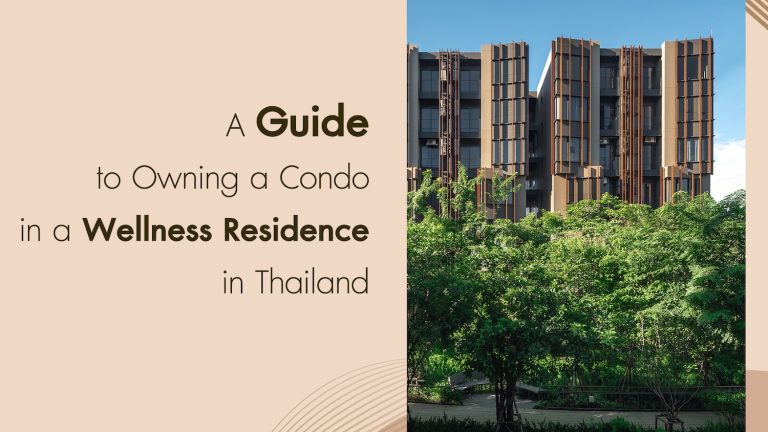
A Guide to Owning a Condo in a Wellness Residence in Thailand
Wellness living is no longer just a buzzword. For many foreign buyers, it has become a practical lifestyle choice — combining health, balance, and community in one place. Thailand, already famous for its world-class healthcare and welcoming lifestyle, is now extending that reputation into real estate through wellness residences.
But once curiosity turns into real consideration, one question usually comes up: how do I actually own a condo in a wellness residence in Thailand?
This guide takes you through everything you need to know — from ownership rules and quotas to visas, service fees, and what makes buying in a wellness community like Jin Wellbeing County so different from a standard condo.
By the end, you’ll see that owning a home in Thailand isn’t just possible — it’s practical, secure, and future-ready.
Understanding Foreign Property Ownership in Thailand
The first step is to clear away confusion. Many foreigners assume they cannot legally own property in Thailand. That’s not true. Under the Thailand Condominium Act, foreigners are allowed to buy and own condominium units outright, provided that:
- Foreign ownership quota does not exceed 49% of the total floor area of the project.
- The purchase funds are transferred from overseas in foreign currency, with proper documentation.
- Ownership is registered at the Land Department.
This means that as a foreigner, you can legally hold the title deed to a condo in your own name. Unlike houses or land, which require leasehold or company structures, condominiums are the most straightforward way for foreigners to own property in Thailand.
Freehold vs leasehold
- Freehold ownership means the unit is 100% yours — permanent, transferable, and sellable. This is the preferred option for most foreign buyers.
- Leasehold (often 30 years, renewable) is sometimes offered, but less common in larger, established developments.
Understanding Foreign Property Ownership in Thailand
Foreign buyers often ask how the 49% quota works in practice. Each condominium project keeps a detailed record of the total floor area sold to foreigners. Once the 49% limit is reached, additional foreign buyers can only purchase under leasehold, even if freehold units remain available for Thai buyers. This makes timing crucial: reserving early ensures access to the foreign quota. Developers like Jin Wellbeing County provide transparency by updating buyers on quota status, helping them avoid last-minute surprises. For investors, this is also a sign of credibility — reputable developers keep buyers fully informed about quota availability and guide them through the paperwork with the Land Department.
What Makes Owning in a Wellness Residence Unique
Owning a condo in a wellness residence is not the same as buying in a standard Bangkok high-rise. The difference lies in what you’re really paying for.
At Jin Wellbeing County, for example, ownership goes beyond square meters. Your fees and services include access to landscaped gardens, fitness facilities, social activities, and — most importantly — healthcare integration. This is what makes it possible to own a condo with healthcare in Thailand: residents enjoy preventive check-ups, on-site clinics, and continuum-of-care services that normal condos cannot provide.
Healthcare as part of ownership value
In many condos, healthcare is entirely external. Residents must manage their own appointments, transportation, and insurance. In contrast, wellness residences integrate healthcare into the community. At Jin, services include preventive screenings, nutrition guidance, physiotherapy, and emergency response. For retirees or families planning, the continuum-of-care model provides a clear pathway: from independent living to assisted living if needed, without the stress of relocating.
Healthcare as a differentiator
Healthcare integration is not just about convenience; it adds measurable value to ownership. At Jin Wellbeing County, residents can access on-site preventive check-ups, physical therapy, wellness coaching, and even long-term care support for elderly residents. These services are bundled into the community lifestyle, making them far more affordable than relying solely on private hospitals. In a standard condo, owners must pay out of pocket for every consultation or emergency visit. In a wellness residence, the healthcare ecosystem is built in — protecting residents’ well-being and reducing the long-term cost of living in Thailand.

Visas and Long-Term Stay Options
For foreign buyers, property ownership often goes hand-in-hand with long-term residency. Fortunately, Thailand offers several visa pathways that align well with wellness living.
- Long-Term Resident (LTR) Visa
Launched in 2022, this visa allows up to 10 years of stay for eligible foreigners — including wealthy global citizens, retirees, professionals, and digital nomads. Property ownership isn’t mandatory, but it strengthens your application by demonstrating ties to the country. - Retirement Visas (O-A and O-X)
- The O-A visa allows one year of stay, renewable annually.
- The O-X visa offers up to 10 years for retirees over 50, with financial requirements. Owning a condo in a wellness community is a natural fit for retirees planning stability and care. Applicants typically need proof of funds (THB 3 million in a Thai bank account or annual income equivalent) and health insurance.
- Thailand Elite Visa
A membership-based program offering 5–20 years of residency. Popular with investors and families, it simplifies long-term living. Packages range from US$16,800–55,800 (approx. THB 600,000–2 million) depending on duration. While not linked directly to property, it’s a convenient option for foreign buyers who want flexibility.
For many, pairing property ownership with the right visa provides peace of mind: not only do you have a home, but also the legal ability to enjoy it for years to come.
Costs and Service Fees Transparency
Every condo comes with management fees. But in a wellness residence, it’s important to understand what you’re getting for those costs.
Normal condos charge monthly fees for basic services: cleaning common areas, security, pool maintenance. Fees in Bangkok average US$55–95 (approx. THB 2,000–3,500) for a 50 sqm condo. Add to this sinking fund contributions (for major repairs), private healthcare costs, gym memberships, and club fees, and the true cost of ownership rises.
Wellness residences like Jin Wellbeing County structure their fees differently. Monthly costs not only cover the basics, but also:
- Access to fitness centers, yoga studios, and wellness classes.
- Preventive healthcare check-ups and on-call medical support.
- Community activities, workshops, and social spaces.
Example comparison
- Normal condo owner: US$70 (approx. THB 2,500) monthly Common Area Maintenance (CAM) fees + US$55 (approx. THB 2,000) private gym membership + US$200 (approx. THB 7,000) annual check-up + ad-hoc healthcare visits = over US$1,600 (approx. THB 57,000) yearly, not counting hidden costs.
- Wellness residence owner: Slightly higher monthly CAM fee, but bundled with fitness, wellness, and healthcare services that already replace external expenses.
Instead of paying separately for gyms, doctors, or clubs, these services are part of your home. While fees may be higher than standard condos, the value is greater — because they cover what you would already be spending elsewhere.
For cautious investors, this transparency is key. You know what you’re paying for, and you see the benefits in your everyday life.
Why a Wellness Residence Is Safer for Foreign Buyers
Trust is one of the biggest concerns for foreigners buying in Thailand. Stories of unfinished projects or poor management make some hesitate.
This is where established wellness communities stand apart. Developers like Jin Wellbeing County position themselves not only as builders, but as long-term operators of integrated communities. That means:
- Lower risk of abandonment — large-scale projects with healthcare and lifestyle integration are built for longevity.
- Better management — wellness communities are designed to maintain high standards, since healthcare and community services depend on trust.
- Future-proof demand — as wellness real estate grows globally (valued at nearly US$400 billion, approx. THB 14 trillion, in 2022 according to the Global Wellness Institute), properties aligned with this trend are more likely to hold value.
Resale and exit strategy
Another practical consideration for foreign buyers is resale. Legally, a condo owned freehold by a foreigner can be resold to another foreigner — as long as the foreign quota is still available — or to a Thai buyer without restriction. This flexibility gives owners confidence that they are not “locked in.” Wellness residences may hold resale value better than standard condos because they are aligned with a global demand trend. As more buyers seek homes with healthcare and lifestyle integration, resale prospects become stronger, offering reassurance to cautious investors.
Due Diligence and Legal Peace of Mind
Before committing to a purchase, foreign buyers often ask about legal due diligence. This is an important step in Thailand, just as it is anywhere else. A lawyer can help review the Sale and Purchase Agreement, check that the condominium license is valid, confirm that the foreign quota is available, and ensure that all payments are made securely. At Jin Wellbeing County, transparency is part of the process — buyers are guided with clear paperwork, proof of quota availability, and support from both the developer’s legal team and trusted external advisors. This level of due diligence offers peace of mind, turning what might feel like a risk in a foreign country into a safe, straightforward experience.
Practical Step-by-Step: How to Buy a Condo in Jin Wellbeing County
So how does the process actually work? Here’s a simplified guide:
- Choose your unit — tour available condos, select size, and view.
- Check foreign ownership quota — ensure the 49% foreign quota has available allocation.
- Reserve your unit — sign a reservation agreement and pay a booking fee (typically US$2,800–5,600 / THB 100,000–200,000, depending on unit size).
- Transfer funds from overseas — money must be sent in foreign currency, with a Foreign Exchange Transaction Certificate (FET) issued by your bank in Thailand. This document is essential for registering ownership.
- Sign the sale and purchase agreement — outlining payment schedule and conditions. Transfer fees and taxes (around 2% of the property price) are typically split between buyer and seller. For example, on a unit priced at US$140,000 (approx. THB 5 million), transfer costs would be about US$2,800 (approx. THB 100,000).
- Register ownership — at the Land Department, you receive the Chanote (title deed). The process usually takes one day.
- Move in and enjoy wellness living — access healthcare, community, and green living as part of your everyday routine.
This process may sound complex, but developers like Jin guide buyers step-by-step, ensuring compliance and peace of mind.
Working with Overseas Agents
Many foreign buyers wonder if they can handle the entire purchase process without traveling to Thailand. The answer is that while the legal registration must be completed in Thailand, overseas property agents in your home country can make the journey much smoother.
Developers like Jin Wellbeing County often partner with trusted agents in countries such as Singapore, Hong Kong, and across Europe. These agents introduce the project, explain ownership rules in your language, and help coordinate with the developer’s sales and legal team in Thailand.
While they cannot finalize the transfer of ownership or register the title deed at the Land Department, they do act as a bridge. They guide you through documentation, arrange viewing trips (both physical and virtual), and ensure that your funds transfer and quota approval are handled correctly.
In short, overseas agents simplify the process — turning what might feel complex into a guided journey. With the developer’s Thai legal team handling the final steps, foreign buyers can feel assured that every stage is supported from start to finish.
Wellness living is more than a trend — it’s a shift in how homes are designed, owned, and experienced. Thailand has pioneered this movement through projects like Jin Wellbeing County, which has already been highlighted as the country’s first wellness residence redefining modern living (link to Article 1: Why Thailand’s First Wellness Residences Are Redefining Modern Living).
For those inspired by the benefits of green living and mental well-being (Link to Article 2: Green Living, Healthy Living: How Wellness Communities Restore Your Body and Mind) and ready to compare wellness residences with standard condos (link to Article 3: Wellness Living vs. Normal Condos: The Real Value for Foreign Buyers), this guide clears the final barrier: showing how ownership works in practice.
For investors, the next question goes beyond ownership: what kind of long-term returns and market growth can wellness residences deliver? That’s what we’ll explore in our next feature.
Ready to own more than just a condo? At Jin Wellbeing County, every unit is part of a wellness-first lifestyle that blends healthcare, community, and sustainability into everyday living.Discover how you can own your condo in Thailand’s first wellness community — Explore more.