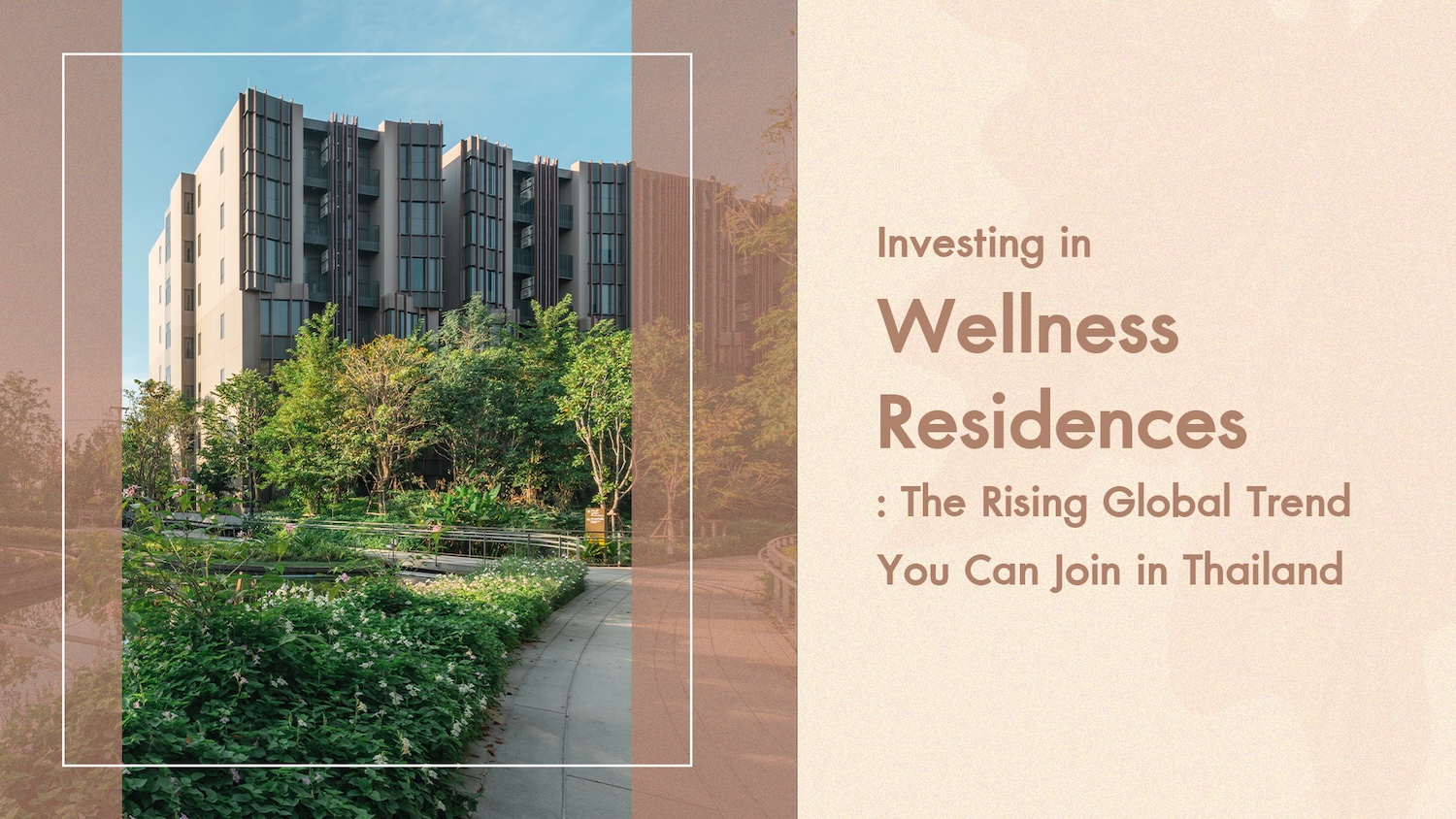
Investing in Wellness Residences: The Rising Global Trend You Can Join in Thailand
Ten years ago, “wellness living” sounded like a niche concept — a marketing label for resorts or boutique spas. Today, it has become one of the fastest-growing segments of global real estate. Homes and communities designed around health, balance, and longevity are attracting not only lifestyle buyers but also serious investors.
According to the Global Wellness Institute, the global wellness real estate market was valued at nearly US$398 billion (approx. THB 14 trillion) in 2022 and is projected to grow to US$580 billion (approx. THB 20.3 trillion) by 2025. That’s not a fad — it’s a long-term megatrend shaping where and how people want to live.
And Thailand is right at the center of this shift. With world-class healthcare, affordable living costs, and a reputation for hospitality, the country is moving beyond short-term wellness retreats into full-scale wellness residences. For investors, this creates an opportunity to join a rising global trend while securing a lifestyle asset with strong demand.
Global Megatrends Driving Wellness Residences
Why are wellness residences suddenly so popular worldwide? The answer lies in the intersection of several global megatrends reshaping both lifestyle and investment decisions.
1. Aging populations
The world is getting older. The United Nations projects that by 2030, 1 in 6 people globally will be aged 60 or over. By 2050, this number will double to 2.1 billion.
In Asia, the shift is even more dramatic. Japan already has more than 29% of its population aged 65 or older, the highest proportion in the world.
Singapore expects nearly 1 in 4 residents to be seniors by 2030, while China will add over 300 million people aged 60+ by 2040.
This demographic surge is creating unprecedented demand for senior-friendly housing — and countries like Thailand, with affordable healthcare and space to build, are well-positioned to meet regional needs.
2. Post-pandemic health priorities
The COVID-19 pandemic reshaped consumer priorities. Health, safety, and quality of life are now at the top of the list when people choose where to live. A report from McKinsey found that consumers are spending more on wellness across six dimensions: better health, fitness, nutrition, appearance, sleep, and mindfulness. Homes that integrate these elements are naturally more attractive.
3. Rise of remote work and digital nomadism
Millions of professionals no longer need to be tied to a central office. Remote work has accelerated demand for living environments that support both productivity and well-being. Communities with co-working areas, green spaces, and wellness amenities are especially appealing to expats and digital nomads — many of whom now choose Thailand for its connectivity and affordability.
4. Growth of the wellness economy
Wellness is no longer a luxury; it’s a global economy. Beyond real estate, the wellness industry as a whole is projected to reach US$7 trillion (approx. THB 245 trillion) by 2025 (Global Wellness Institute). For real estate investors, this alignment means wellness-focused properties are not just catering to a niche — they’re part of a global shift in how people want to live and spend.

Why Thailand Is Poised to Benefit
While wellness residences are booming worldwide, Thailand has unique advantages that make it one of the most attractive destinations for foreign investors.
1. World-class healthcare at a fraction of the cost
Thailand consistently ranks among the top medical tourism destinations in the world. According to the World Health Organization, Thailand’s healthcare system outperforms many peers in Asia for both quality and affordability. A comprehensive private hospital check-up costs around US$200 (approx. THB 7,000), compared to US$1,000 or more in the US or Singapore. This affordability strengthens the appeal of healthcare-integrated residences.
2. Aging Asia, retiring in Thailand
With senior living costs soaring in developed markets, many Asian retirees are looking to Thailand for more affordable yet high-quality alternatives. Singapore’s rapidly aging population, for instance, faces high housing and care costs. In contrast, Thailand offers space, greenery, and integrated healthcare at a fraction of the price. That positions Thailand’s senior living investment as a smart play for the coming decades.
3. Strong expat and lifestyle base
Thailand has long been a magnet for expats, entrepreneurs, and retirees. Bangkok is one of the world’s most visited cities, while destinations like Chiang Mai, Phuket, and Hua Hin are hubs for long-stay foreigners. The government has reinforced this appeal with visa options like the Long-Term Resident Visa and the Thailand Elite Visa, making it easier for investors to pair property ownership with residency.
4. Competitive property prices
Compared to Hong Kong, Singapore, or Tokyo, property in Thailand remains highly competitive. Prime condos in Bangkok average US$6,000–7,000 per sqm (approx. THB 210,000–245,000), while wellness residences outside the central core — such as in Pathum Thani — can offer larger spaces, greener surroundings, and integrated services at lower entry points. For foreign buyers, that means getting more value for both lifestyle and investment potential.
Jin Wellbeing County: Thailand’s First Integrated Wellness Community
To see how these trends come together in practice, look no further than Jin Wellbeing County in Pathum Thani, just outside Bangkok. As Thailand’s first integrated wellness residence, Jin sets a new benchmark for what property investment in Thailand can look like.
Healthcare integration
Unlike normal condos, Jin includes preventive healthcare, on-site clinics, and a continuum-of-care model that allows residents to transition from independent living to assisted living if needed. This is a critical differentiator for aging populations and health-conscious expats.
Green and sustainable living
With landscaped gardens, walking paths, and energy-efficient design, Jin delivers a lifestyle rooted in balance. This aligns with the demand for green living, as already explored in our feature on wellness and nature.
Community and connection
Social isolation is one of the biggest challenges for expats and retirees. Jin addresses this with built-in community: fitness classes, workshops, group dining, and cultural activities. For investors, this means higher tenant satisfaction and longer rental stays.
Location advantage
Pathum Thani offers the best of both worlds: space, greenery, and lower costs, while still being within easy reach of Bangkok’s opportunities. For investors, this balance enhances long-term value.
Together, these factors position Jin not just as a residence but as a case study of future-proof property investment in Thailand.
ROI and Long-Term Value
For many foreign investors, the bottom line is return on investment (ROI). Wellness residences like Jin offer advantages that go beyond simple price appreciation.
1. Rental appeal
Expats, digital nomads, and long-stay retirees are increasingly looking for homes with healthcare and wellness amenities. A normal condo with a pool and gym cannot compete with a community that offers preventive care, workshops, and social life. This boosts occupancy and rental yields.
Rental yields in Bangkok condos typically average 3–5% annually. Wellness residences, however, can often push higher because they attract longer-stay tenants and reduce vacancy.
For example, expats or retirees choosing wellness communities are less likely to move frequently since their healthcare and lifestyle needs are already built in. This translates to more consistent income for owners — a critical factor for investors who prioritize stable cash flow over speculative gains.
2. Resale potential
As the wellness real estate market grows globally, demand for such properties will continue to rise. Owners of wellness residences have stronger resale prospects compared to standard condos, which often depreciate as new projects enter the market.
3. Investment stability
Wellness residences are part of the “silver economy” — industries serving older adults and wellness-conscious buyers. With the UN projecting that people aged 60+ will outnumber those under 15 by 2050, this demographic shift provides long-term demand stability.
4. Property investment Thailand 2025–2026 outlook
Market reports from CBRE Thailand highlight how developers are shifting focus toward mixed-use and wellness-oriented projects to meet buyer demand. For investors, this means that properties aligned with wellness will likely outperform conventional condos in 2025–2026, both in appreciation and rental stability.
Government policy also plays a role. Programs like the Long-Term Resident Visa and the Thailand Elite Visa make it easier for foreigners to stay long-term, which boosts property appeal.
At the same time, infrastructure development, such as new MRT lines and expressways, is expanding access to suburban areas like Pathum Thani.
These transport upgrades shorten commutes and increase land value, reinforcing the case for wellness residences outside central Bangkok as smart investments for 2025–2026.
Why Wellness Residences Are the Property to Invest in 2026
If you are looking at property to invest in 2026, the case for wellness residences is clear.
- They align with global megatrends — aging populations, wellness economy growth, and remote work.
- They offer built-in healthcare, green space, and community, meeting real lifestyle needs.
- They position Thailand as an early mover in Asia’s wellness real estate market, creating opportunities before prices reach the levels of Singapore or Hong Kong.
Unlike standard condos, which often compete only on location and price per square meter, wellness residences compete on quality of life. That is a far more resilient metric in a world where health and well-being are increasingly prioritized. For investors, this means joining a global movement while securing an asset that appeals to multiple buyer demographics — from retirees to young families to expat professionals.
Linking Back and Looking Ahead
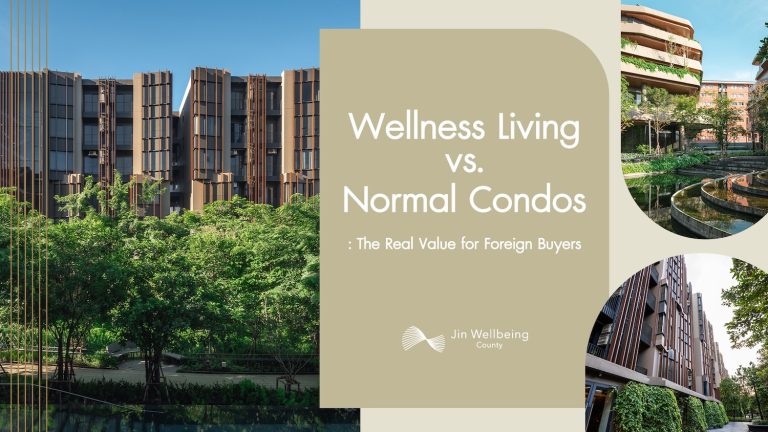
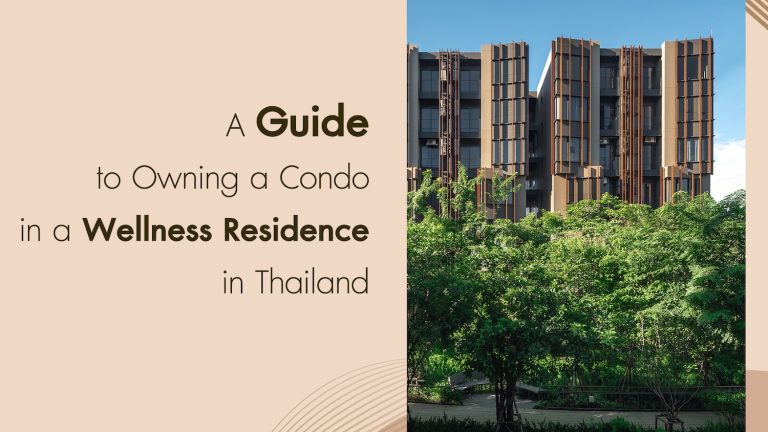
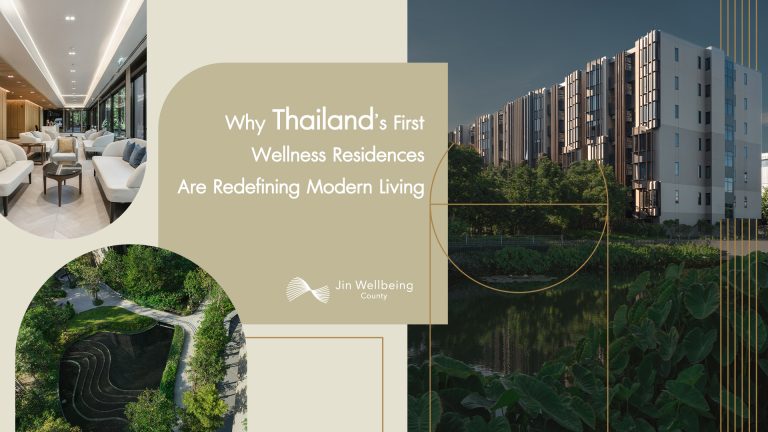
This feature shows why wellness residences are emerging as a future-proof investment asset. For those new to the concept, it’s worth revisiting how Jin Wellbeing County first redefined modern living in Thailand (see Article 1: Why Thailand’s First Wellness Residences Are Redefining Modern Living). If you’re curious about lifestyle benefits, explore how green living supports health and balance (Link to Article 2: Green Living, Healthy Living: How Wellness Communities Restore Your Body and Mind). And if you’re weighing the numbers, our condo vs wellness comparison (link to Article 3: Wellness Living vs. Normal Condos: The Real Value for Foreign Buyers) shows why ROI prospects are stronger. Finally, for practical steps, see our ownership guide (link to Article 4: A Guide to Owning a Condo in a Wellness Residence in Thailand).
Together, these stories form a complete picture: wellness living is no longer just about lifestyle — it’s an investment trend you can join right now.
From Lifestyle to Asset Class
Wellness residences are not simply homes with gyms and gardens. They are future-ready communities built around healthcare, sustainability, and connection. For global investors, they represent a chance to join a rising asset class at an early stage — especially in Thailand, where costs are still competitive and demand is accelerating.
At Jin Wellbeing County, that vision is already a reality. With healthcare integration, green design, and built-in community, it stands as both a lifestyle upgrade and a smart long-term investment.Discover how investing in Thailand’s first wellness community can secure both your lifestyle and your future — Explore more.